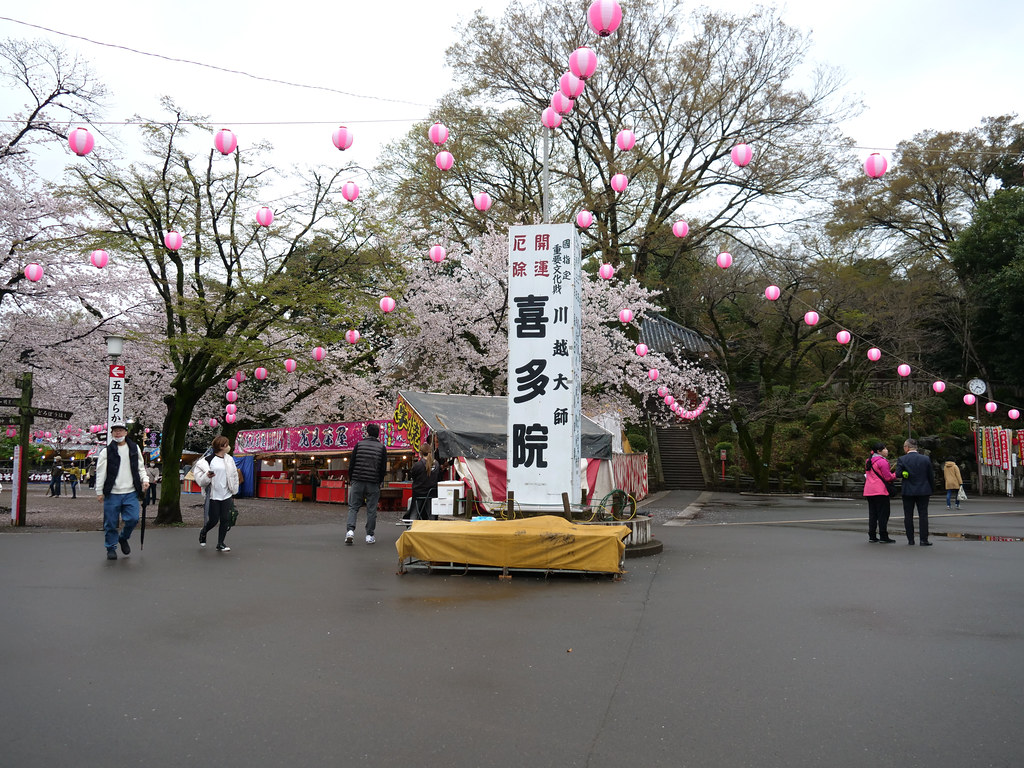

Kita-in Temple
Kita-in Temple, located in Kawagoe City, Saitama Prefecture, is a historic Tendai sect Buddhist temple with the mountain name Hoshinoyama and principal deity Amitābha Buddha. It enshrines Jie Daishi Ryōgen (also known as Gansan Daishi), a revered monk of the Heian period, and is affectionately known as Kawagoe Daishi. As a major center of faith and culture, Kita-in is one of the most prominent temples in “Little Edo Kawagoe,” celebrated for its rich history, refined architecture, and living traditions.
The temple was originally founded in 830 CE (Tenchō 7) by Ennin (Jikaku Daishi) under imperial order and was first called Muryōju-ji. It declined due to warfare but was later rebuilt by Monk Sonkai at the end of the Kamakura period, becoming a key temple of the Tendai school in eastern Japan. During the Sengoku period, the temple was again destroyed by fire, but in the early Edo period, Priest Tenkai restored it and renamed it Kita-in, under the patronage of Shogun Tokugawa Iemitsu, leading to a new era of prosperity.
After the Great Kawagoe Fire of 1638, much of the temple was destroyed. Iemitsu ordered parts of the Momijiyama Palace from Edo Castle to be relocated here, forming today’s main surviving structures — the Reception Hall (Kyakuden), Study Hall (Shoin), and Temple Kitchen (Kuri) — all designated as Important Cultural Properties of Japan. The “Room of Iemitsu’s Birth” is traditionally believed to be the place where Iemitsu was born, while the “Kasuga-no-Tsubone Dressing Room” is said to have been used by his wet nurse, Kasuga-no-Tsubone.
Kita-in’s grounds feature a solemn and historic atmosphere. The Sanmon Gate, Belfry Gate, and Jigen Hall (dedicated to Tenkai) stand as enduring symbols of Edo-period temple architecture. The temple’s most iconic attraction is the Five Hundred Rakan (Arhats) — 538 expressive stone statues, considered one of Japan’s three great Rakan collections. It is said that at night, one may find a statue resembling a lost loved one by gently touching the heads of the figures.
Kita-in is also one of the temples on the Kawagoe Seven Lucky Gods Pilgrimage, enshrining Daikokuten, the deity of wealth and good fortune. The temple is crowded with worshippers during New Year’s prayers, Setsubun, Chrysanthemum Festivals, and Shichi-Go-San celebrations. The annual Hatsu-Daishi (Daruma Market) on January 3rd is particularly famous and regarded as Saitama’s largest New Year’s event.
The temple’s principal figure, Jie Daishi Ryōgen, is venerated as a guardian against misfortune and a bringer of peace. His teachings and legendary virtues grant him an esteemed place in Japanese Buddhism. His image is enshrined in the main Jie Daishi Hall, flanked by statues of Fudō Myōō, creating a sacred and serene atmosphere.